Schedule Compression
Schedule compression involves techniques used to shorten the duration of a project without reducing the original scope. These methods are essential for teams facing tight deadlines or unexpected delays because they help maintain project momentum and meet stakeholder expectations.
Frequently Asked Questions
What are the primary methods of schedule compression?
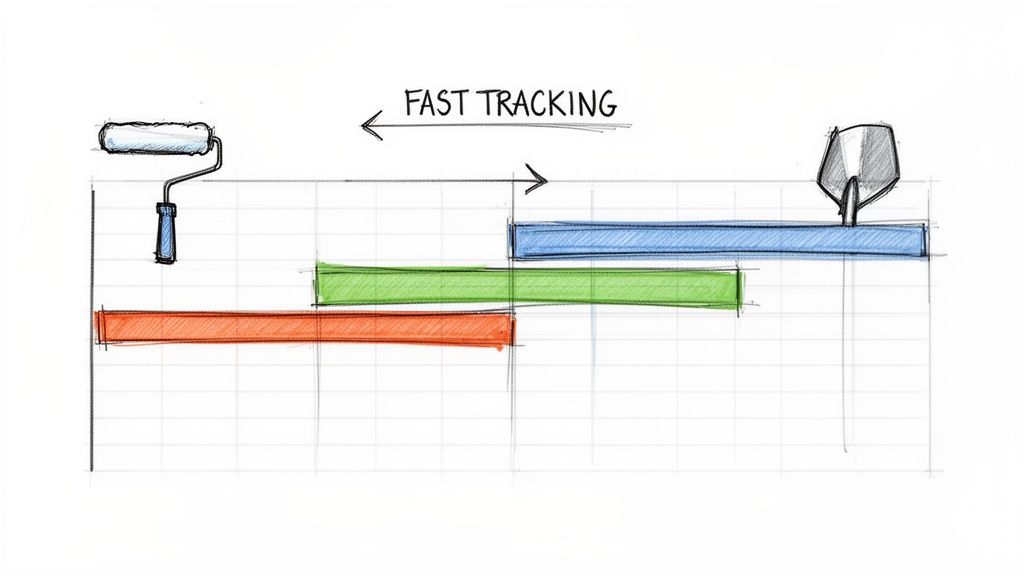
The two main techniques are crashing and fast tracking. Crashing involves adding more resources to critical path tasks, while fast tracking involves performing activities in parallel that were originally planned in sequence.
How does schedule compression improve team collaboration?
It forces teams to prioritize critical path items and communicate more frequently about dependencies. Using a tool like WeekBlast helps everyone stay aligned on these accelerated timelines by providing clear visibility into weekly progress.
What is a common risk when compressing a project schedule?
The most significant risk is increased cost and potential quality issues due to rework. To mitigate this, project leads should conduct frequent check-ins and ensure that the team is not experiencing burnout from the increased workload.