Cycle Time Formula
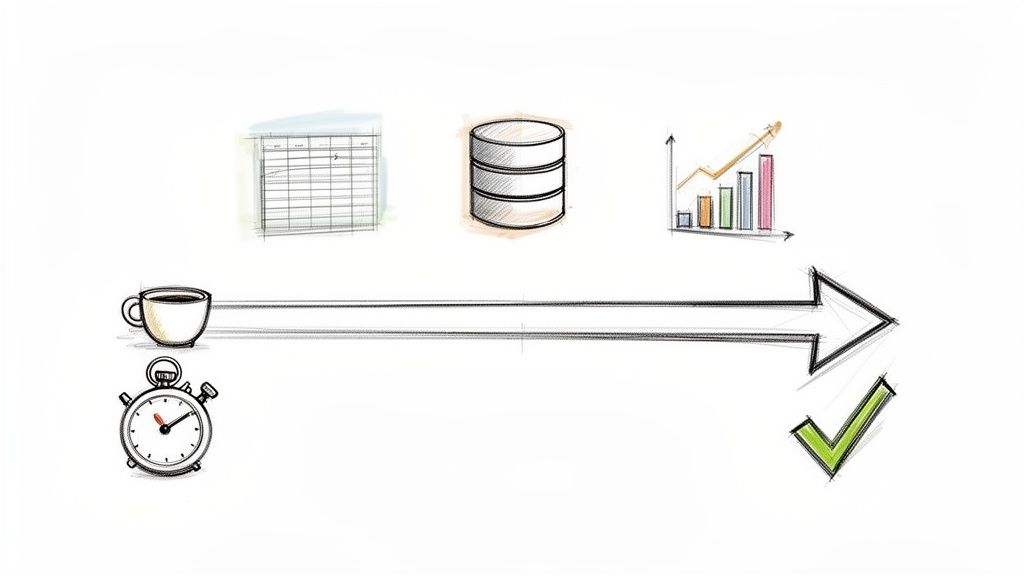
The cycle time formula measures the total time it takes for a team to complete a specific task from the moment work begins until it is delivered. Understanding this metric is essential for teams looking to identify bottlenecks and improve their overall delivery speed. By tracking cycle time, organizations can create more predictable workflows and set realistic expectations for stakeholders.
Frequently Asked Questions
What is the standard cycle time formula for software development teams?
The standard cycle time formula is calculated by subtracting the start date of a task from its completion date. This simple calculation provides a clear view of how long individual work items spend in progress. Teams using WeekBlast can use these insights to report on their velocity and identify which types of tasks consistently take longer than expected.
How does monitoring cycle time improve team collaboration and performance?
Monitoring cycle time helps teams identify hidden obstacles and dependencies that cause delays in the production pipeline. When teams share these metrics in their weekly updates, it fosters a culture of transparency and data-driven decision making. This visibility allows leads to redistribute resources or adjust processes to ensure a smoother flow of work.
What is a best practice for accurately measuring cycle time across a department?
A key best practice is to define clear start and end points for every task to ensure data consistency across different squads. You should also consider excluding non-working hours or holidays if you want to measure pure active work time more accurately. Regularly reviewing these metrics during syncs helps the team refine their estimates and improve long-term planning accuracy.