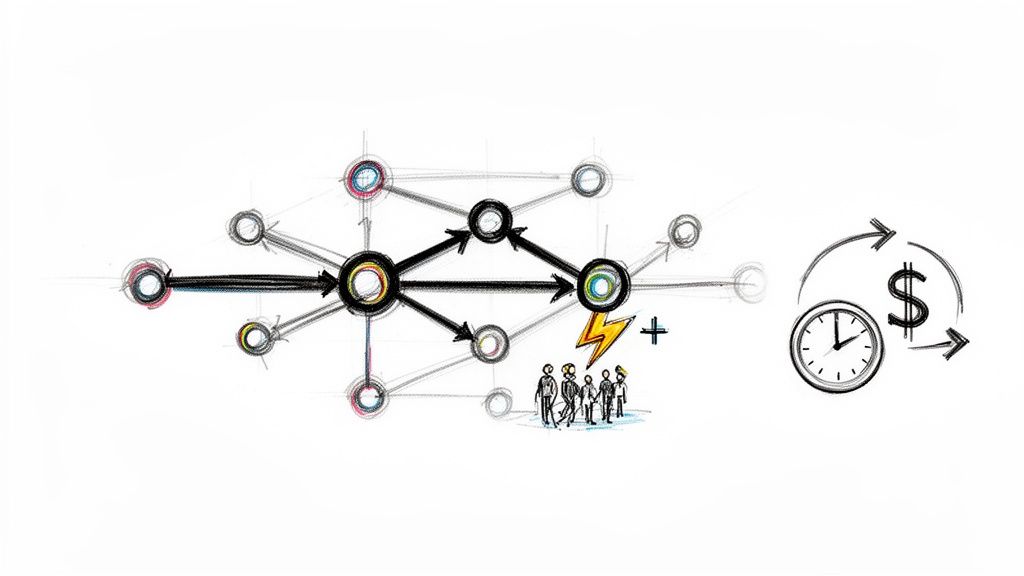
Critical Path Method
The Critical Path Method (CPM) is a project management technique used to identify the longest sequence of dependent tasks and the minimum time needed to complete a project. By focusing on these essential activities, teams can prioritize resources effectively and ensure deadlines are met without unnecessary delays. Using CPM helps organizations visualize project timelines and manage risks more efficiently during weekly updates.
Frequently Asked Questions
What is the Critical Path Method and how does it function?
The Critical Path Method is a scheduling algorithm that identifies the sequence of project activities which determines the shortest possible duration for completion. It works by mapping out task dependencies and calculating the amount of float or slack for each activity. This allows managers to see which tasks are flexible and which must remain on schedule to avoid project delays.
How does identifying the critical path improve team collaboration?
Identifying the critical path provides teams with a shared understanding of which tasks are most impactful to the overall project timeline. When everyone knows which activities are high priority, it becomes easier to allocate resources and coordinate handoffs during weekly syncs. This clarity reduces friction and ensures that team members are focused on the most vital work.
What is a practical tip for managing a project's critical path?
One effective tip is to regularly review task dependencies and update progress in a tool like WeekBlast to catch potential bottlenecks early. If a task on the critical path is delayed, you should immediately assess if resources can be shifted from non-critical tasks to get back on track. Maintaining this visibility helps the entire team stay aligned on the final delivery goal.