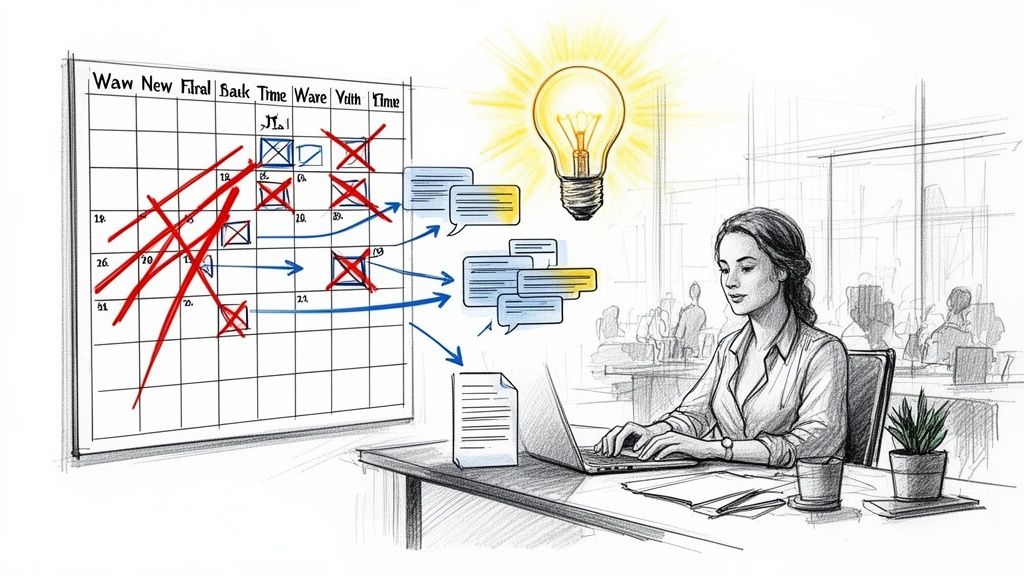
How to Reduce Meetings
Excessive meetings often lead to lower productivity and fragmented focus time for high performing teams. Learning how to reduce meetings helps organizations reclaim hours for deep work while ensuring that essential information still flows through the right channels. By shifting toward asynchronous communication, teams can maintain alignment without the constant disruption of video calls.
Frequently Asked Questions
What does it mean to reduce meetings in a professional setting?
Reducing meetings involves auditing current calendars to eliminate low value sessions and replacing them with more efficient communication methods. It focuses on prioritizing deep work and ensuring that every live gathering has a clear purpose and a defined agenda.
How does reducing meetings improve team collaboration?
When teams spend less time in meetings, they often shift to written updates and documentation, which provides a permanent record of decisions. This transparency allows team members to stay informed at their own pace, reducing the need for repetitive status updates.
What is a practical first step for a team lead to cut down on meetings?
A practical first step is to implement an asynchronous status reporting tool like WeekBlast to replace daily standups or weekly catchups. This allows team members to share progress and blockers in a written format, leaving live meetings for complex problem solving or social bonding.