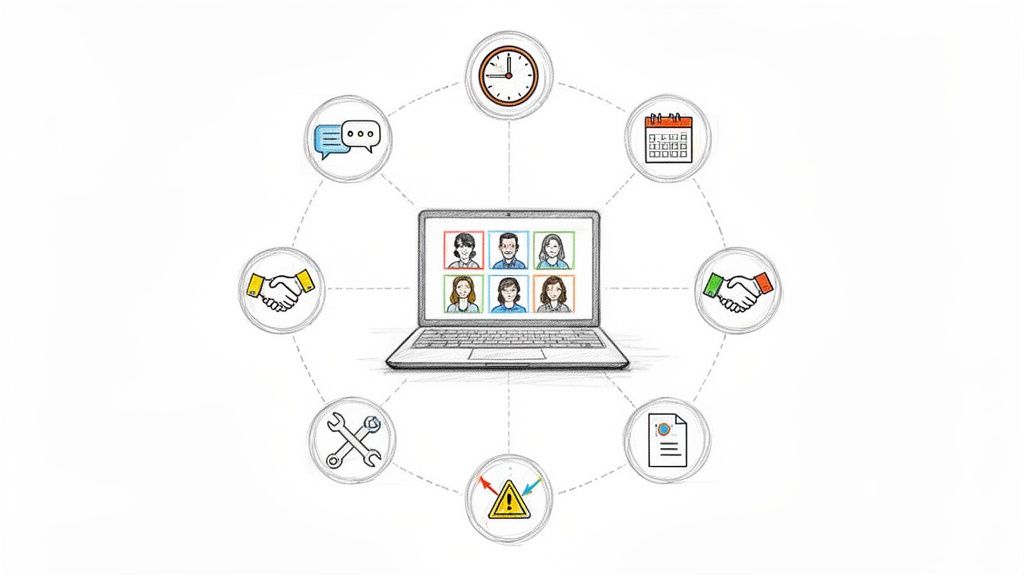
Managing Remote Teams
Effective remote management focuses on building trust and maintaining clear communication across distributed environments. This topic covers strategies for keeping team members aligned, productive, and connected regardless of their physical location. Using tools like WeekBlast helps managers track progress and maintain visibility without micromanaging.
Frequently Asked Questions
What is the most important aspect of managing remote teams?
The core of remote management is establishing clear expectations and outcomes rather than tracking hours. By focusing on deliverables and using structured updates, managers can ensure progress stays on track while providing employees with necessary flexibility.
How does remote management improve team collaboration?
It encourages teams to document processes and communicate more intentionally through asynchronous channels. This shift reduces meeting fatigue and allows team members to contribute at their peak productivity times, fostering a more inclusive and efficient work culture.
What is a practical tip for maintaining visibility in a remote setting?
Implement a weekly check-in process where team members share their wins and challenges. Platforms like WeekBlast simplify this by providing a central place for updates, making it easy for leads to stay informed and offer support where it is needed most.