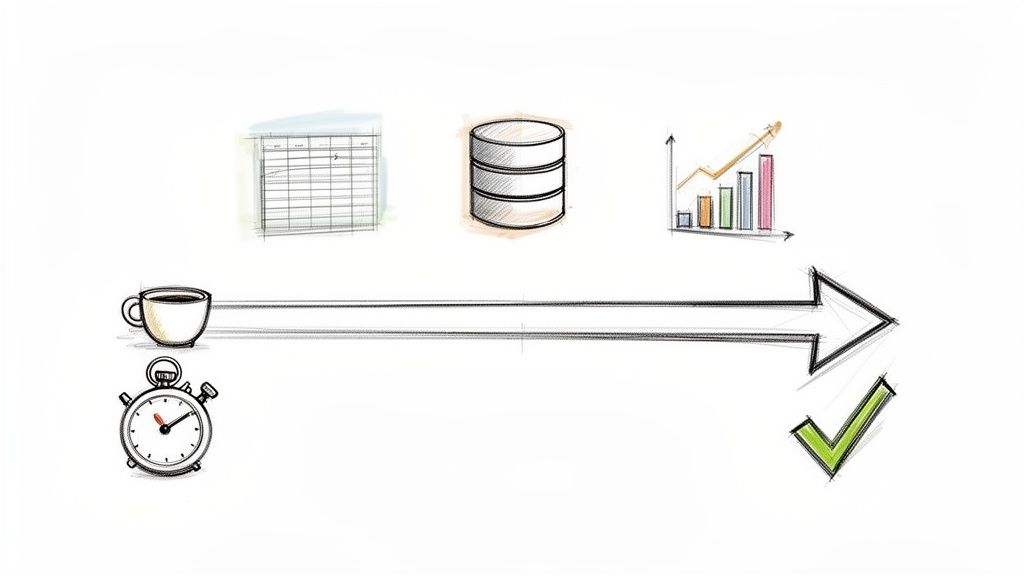
Lead Time vs. Cycle Time
Understanding the difference between lead time and cycle time is essential for optimizing team workflows and delivery speed. While lead time measures the total duration from a customer request to final delivery, cycle time focuses on the active work phase within the production process. Tracking these metrics helps teams identify bottlenecks and improve their overall operational efficiency.
Frequently Asked Questions
What is the primary difference between lead time and cycle time?
Lead time encompasses the entire journey of a task from the moment it is requested until it is delivered to the customer. Cycle time is a subset of lead time that tracks only the period when the task is actively being worked on by the team.
How does monitoring these metrics improve team collaboration?
Measuring these timeframes allows teams to see where work gets stuck in queues versus where active development happens. By discussing these trends in WeekBlast updates, teams can align on process improvements and set more realistic expectations for stakeholders.
What is a practical way to reduce cycle time for a software team?
One effective strategy is to break down large tasks into smaller, manageable units of work that can be completed quickly. Teams can use weekly updates to flag blockers early, ensuring that work moves through the active phases without unnecessary delays.