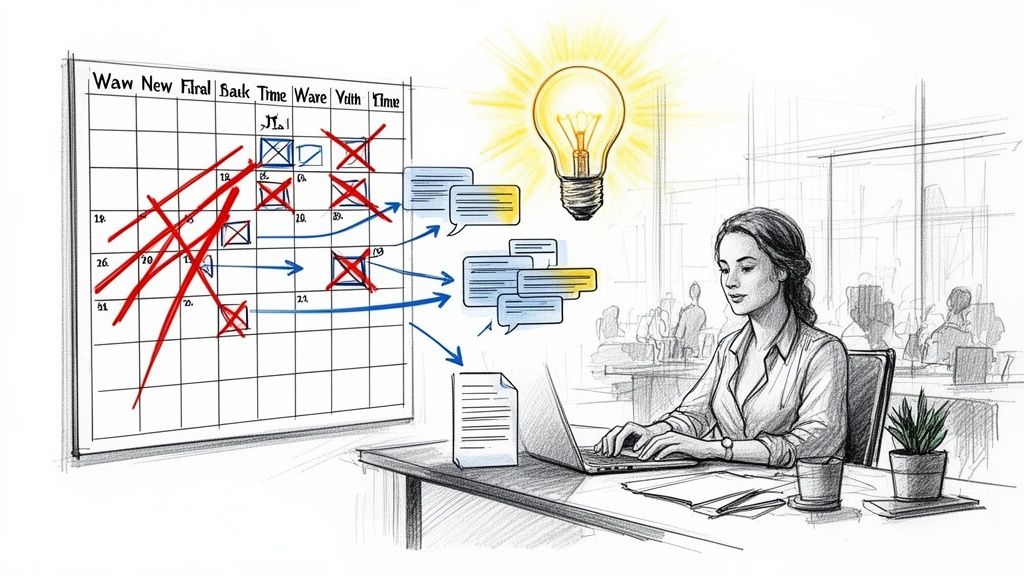
If you really want to cut down on meetings, you first have to face the cold, hard truth about what they're actually costing you. This isn't just about freeing up an hour here or there; it's about a fundamental shift in how your team collaborates and protects its most valuable asset: focused time. The first step is to build a rock-solid case for change, one that’s grounded in the real-world impact of a packed calendar.
The True Cost of Meeting Overload
That constant ping of a calendar notification isn't just a minor annoyance, it's the sound of productivity and morale draining away. For so many people, especially engineers, designers, and even managers, a day choked with meetings feels like running in place. You’re definitely busy, but are you actually getting your most important work done?
This feeling of motion without progress is a classic sign of meeting fatigue. When the workday is chopped up into 30- and 60-minute blocks, the chance to do deep, meaningful work completely vanishes. Those little gaps between calls are rarely enough to get into a real groove, forcing you into a constant state of context switching that just murders momentum and creative thinking.
The Hidden Toll on Your Team
The damage goes way beyond just the hours lost on the clock. A meeting-heavy culture creates a ripple effect of problems that can seriously harm your team’s well-being and output. This is especially true for remote and distributed teams, where back-to-back video calls can feel even more exhausting than sitting in a conference room.
Think about the psychological weight of a calendar that looks like a game of Tetris:
- Shattered Focus: Real, creative work demands long, uninterrupted stretches of time. Meetings are the enemy of that. They break your concentration, making it nearly impossible to get into that "flow state" where the best work happens. We've actually written a guide on how to stay focused at work that digs into protecting this time.
- A Fast Track to Burnout: When the 9-to-5 is consumed by meetings, the actual work gets shoved into the evenings and weekends. That’s not a sustainable way to operate, and it’s a recipe for burnout, disengagement, and, ultimately, people leaving.
- Loss of Autonomy: Having your entire day dictated by other people's meeting invites is incredibly disempowering. It strips away your control over your own time and schedule, which is a huge factor in job satisfaction.
The Alarming Numbers Behind Meeting Overload
This isn't just a feeling; the data paints a stark picture of a massive productivity problem. The numbers are genuinely shocking when you see them all together.
| Statistic | Impact on Employees |
|---|---|
| 392 hours annually | The average time an employee spends in meetings, equal to 10 full workweeks. |
| 78% of workers | Admit they can't get their "real work" done because of too many meetings. |
| 76% of workers | Report feeling completely drained on days packed with back-to-back calls. |
| 24 billion hours | The time wasted globally each year in unproductive meetings. |
Looking at these stats, it becomes clear that this isn't a minor inconvenience. It's a systemic issue that's actively holding teams back.
By framing the cost of meetings in terms of lost focus, burnout, and real-world numbers, you change the entire conversation. It’s no longer about "I don't like meetings." It becomes, "Our meeting culture is actively preventing us from doing our best work."
Getting a handle on this context is the essential first step. It’s not about pointing fingers or blaming people for scheduling calls. It's about a collective realization that the current way isn't working and that a better, more efficient way to collaborate is possible. Once everyone is on board with the why, you can start the practical work of auditing your calendar and taking back your team's time.
Conducting a Ruthless Meeting Audit
Before you can fix your meeting culture, you need to get a painfully clear picture of just how bad the problem is. This goes way beyond just glancing at a packed calendar and sighing. It means actually auditing where your team’s most precious, non-renewable resource (their time) is going.
Think of it less as an audit and more as an investigation. You're not looking to blame anyone for scheduling meetings. You're simply gathering the evidence needed to make smarter, more intentional decisions.
Start by pulling a list of every single recurring meeting your team is expected to attend. The daily stand-up, the weekly sync, the monthly all-hands, everything. Your default mindset should be aggressive: every meeting is guilty until proven innocent. It's a candidate for elimination, not preservation. This shift in perspective is what separates a real audit from a simple calendar cleanup.
Categorize Every Meeting by Its Purpose
To figure out what to cut, you first have to understand the why behind each calendar invite. Not all meetings are created equal, and grouping them by function quickly reveals the patterns of waste. You'll start to see which types of gatherings are genuinely valuable and which are just low-value habits hiding in plain sight.
Most meetings tend to fall into one of three buckets:
- Decision-Making: These are held to make a specific, binding choice. You walk in with options, you debate, and you walk out with a clear path forward.
- Brainstorming & Ideation: This is for creative, free-flowing exploration. The goal is to generate a ton of new ideas, and the collaborative, unstructured format is the whole point.
- Information-Sharing: Here’s the big one. This category is the most common and, frankly, the source of the most wasted time. We're talking status updates, project check-ins, team announcements, the works.
Once you’ve sorted your meetings, the path forward becomes much clearer. Those information-sharing meetings? They are almost always the first and easiest targets to replace with a better, asynchronous process.
This simple flowchart perfectly illustrates the cognitive cost of defaulting to a meeting.
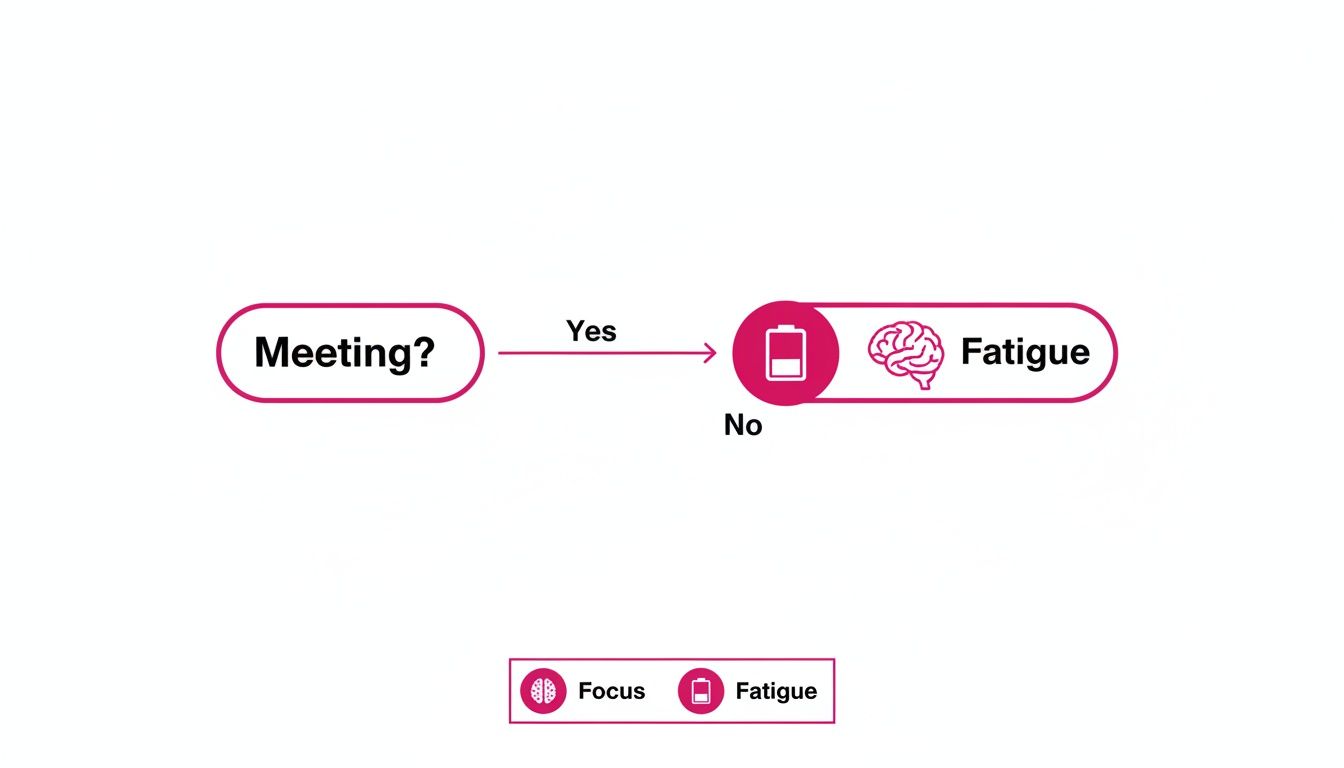
It’s a stark reminder that while some meetings are essential, the automatic outcome is a drain on the energy and focus required for actual, productive work.
Ask the Tough Questions
With your categorized list in hand, it’s time to get tough. For every single meeting, especially the recurring ones, you need to challenge its very existence. Don't be afraid to be a little provocative here, sometimes the only way to break the cycle of pointless meetings is to force a real justification.
For each meeting, ask these three questions:
- What is the specific, desired outcome of this meeting? If you can't nail this down in one clear sentence, the meeting is probably pointless. "Catch up" and "touch base" don't count.
- Could this outcome be achieved without a real-time meeting? Could a shared doc, a quick video recording, or an email do the job? For status updates, a great asynchronous alternative is using a weekly progress report template.
- What is the absolute worst thing that would happen if we just canceled this meeting for the next two weeks? This is the ultimate test. If the honest answer is "not much," then you've found a meeting that needs to be permanently deleted.
A meeting isn't a measure of productivity. It's an admission that you haven't found a better, less disruptive way to collaborate yet. The audit is your chance to find those better ways.
Answering these questions honestly gives you the ammunition you need to start clearing the calendar. It transforms the vague feeling of being "too busy" into a data-backed plan for reclaiming your team's focus time. This audit is the foundation for everything that comes next.
Building an Asynchronous-First Culture
Once you’ve done the ruthless work of auditing your meetings and seeing just how much time is being wasted, the real work begins. It’s not enough to just delete meetings from the calendar. You have to replace them with something better: a culture that defaults to asynchronous communication.
This is a fundamental mindset shift. The knee-jerk reaction to a problem can no longer be "let's schedule a call." Instead, the first question should always be, "How can we solve this without breaking everyone's focus?"
An async-first culture is built on a deep respect for focused work. It gives your team control over their schedules and trusts them to contribute thoughtfully when they have the time and context, not just when a calendar notification pops up. This isn't about avoiding communication; it's about making it more intentional.
Turning Synchronous Habits into Async Workflows
The key is to replace common, time-sucking meetings with structured async alternatives that actually improve clarity and connection. A lot of teams worry that going async will lead to confusion or isolation. In my experience, the opposite happens. When done right, it creates a more organized, documented, and inclusive way of working.
Here are some of the most common meeting culprits and how you can convert them into effective async workflows:
- Daily Stand-ups: This is often the easiest first win. The point of a stand-up is quick alignment, not deep discussion. A simple daily check-in posted in a dedicated Slack channel or a specialized tool gets the job done without the scheduling dance.
- Weekly Status Updates: These meetings are notorious for being a one-way information dump where everyone zones out. A much better approach is a written weekly update where each person shares their progress, plans, and any roadblocks. Tools like WeekBlast are built for exactly this, creating a clean, searchable history of what’s actually getting done.
- Team Announcements: Instead of pulling everyone into a meeting just to listen to you talk, record a quick video using a tool like Loom. You can share your screen, explain the update, and let people watch it on their own time. They can even leave timestamped comments with questions, making follow-up way more efficient.
- Brainstorming Sessions: True brainstorming often happens when people have space to think. Kick off the process with a collaborative document or a digital whiteboard like Miro. Give everyone a few days to drop in their ideas. This levels the playing field for introverts and often produces more thoughtful, creative starting points before you ever need a live discussion.
The goal isn't just to stop meeting; it's to communicate more effectively. Asynchronous methods force clarity and create a written record, which is a massive advantage over verbal discussions that are easily forgotten.
This shift empowers people to engage when they are at their best, rather than forcing them to conform to a rigid, often unproductive, schedule.
A Real-World Scenario From an Engineering Team
Let me give you a concrete example. I worked with an engineering team that was stuck in a one-hour weekly status meeting every Tuesday morning. It was a painful round-robin where each developer gave a verbal update that was irrelevant to about 80% of the people in the room. It broke everyone’s morning focus and almost never led to any real decisions.
After we audited the meeting and realized its sole purpose was one-way information sharing, the team lead made the call to kill it and go fully async.
Here’s the simple process they put in place:
- Cancel the Recurring Meeting. The first step was the boldest, they just deleted it from the calendar for good.
- Implement a Simple Tool. They adopted a lightweight tool where each engineer posted a few bullets about their progress by Monday end-of-day.
- Establish a Clear Template. To keep the updates scannable and consistent, they used a classic "Progress, Plans, Problems" (PPP) format.
This is what it looks like in practice. An update in a tool like WeekBlast gives everyone, from the team lead to stakeholders, a crystal-clear view of what's happening without needing to sit through an hour-long meeting.
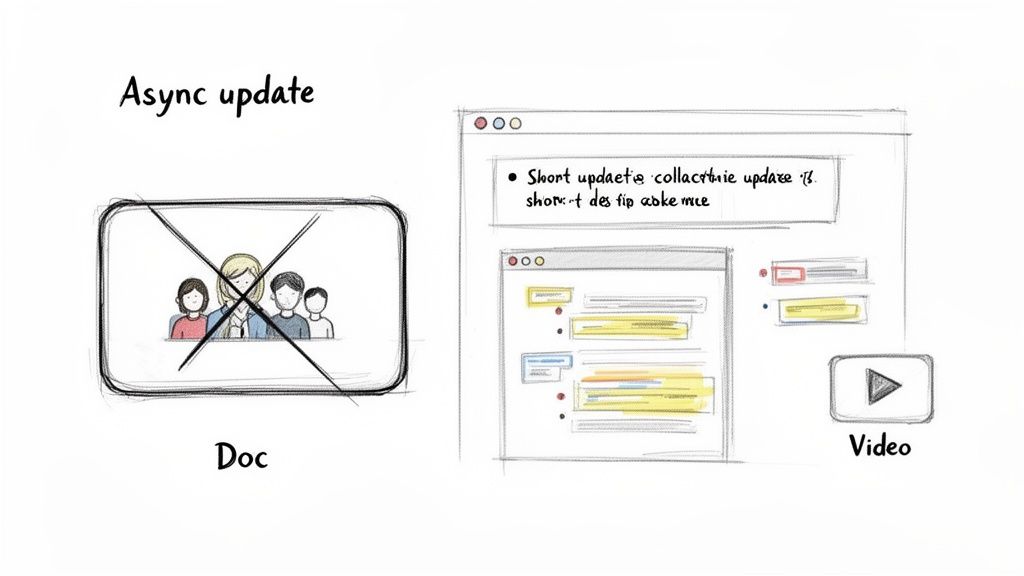
The results were immediate. The team instantly reclaimed 52 hours of meeting time per developer, per year. But the bigger win was the searchable, permanent record of progress they created. It became an invaluable resource for performance reviews and project retrospectives.
Funnily enough, visibility improved. The information was now accessible on-demand instead of being locked away in a single, forgettable weekly meeting. To dig deeper into this, you can learn more about why async updates matter and how they can reshape your team's culture. This small change did more than just cut a meeting; it built a foundation for a more focused and productive way of working.
Setting Up Clear Meeting Guardrails
Once you’ve audited your calendars and started flexing those async muscles, the real work begins: making it stick. If you don't put some clear rules in place, old habits will creep back in, and calendars will inevitably fill up again. This is where you need to establish a few simple, firm “guardrails” to protect your team’s most valuable resource, their time for focused work.
Think of these less as rigid bureaucracy and more as a shared agreement. When everyone understands the basic requirements for calling a meeting, it becomes second nature to respect each other's deep work time. A few well-defined policies are all it takes to defend your team’s newly reclaimed focus.
Establish Non-Negotiable Meeting Policies
Let's start by introducing a few straightforward, non-negotiable rules for any live get-together. These need to be dead simple to understand and apply across the board. When these become the default way of operating, the quality of your necessary meetings will skyrocket, and the number of pointless ones will fall off a cliff.
Here are three powerful guardrails you can put into practice right away:
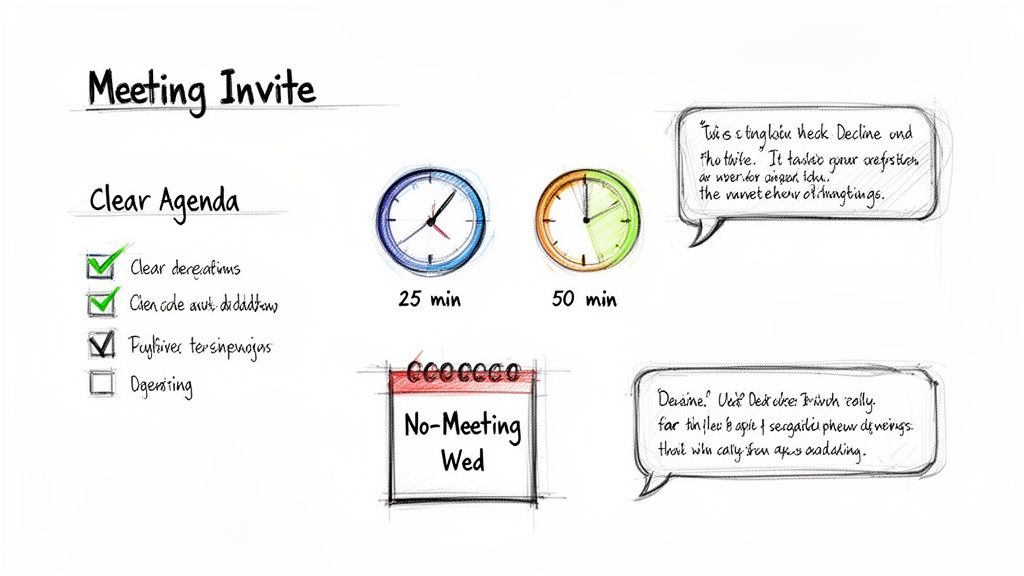
- No Agenda, No Meeting. This is the golden rule. Every single meeting invitation must have a clear agenda outlining the goals and the desired outcomes. An invite simply titled "Project Sync" just doesn't cut it anymore. This one change forces the organizer to stop and think critically about why they actually need to take up people's time.
- Default to Shorter Meetings. Head into your company's calendar settings and change the default meeting durations from 30 and 60 minutes to 25 and 50 minutes. It's a small tweak, but it's a perfect example of Parkinson's Law in action. It automatically builds in a buffer between calls and nudges everyone to be more concise.
- Protect Deep Work Time. Cordon off specific blocks of time as meeting-free zones. A company-wide "No-Meeting Wednesday" is a popular and incredibly effective strategy. It guarantees everyone has at least one full day a week for uninterrupted, high-impact work.
These policies aren’t just friendly suggestions; they're the new standard. Their real power comes from being applied consistently by everyone, from the newest hire all the way up to the CEO.
Give Your Team Permission to Decline
Setting new rules is one thing, but you also have to empower every single person on your team to uphold them. This means giving them not just the right words to use, but more importantly, the psychological safety to politely push back on or decline meetings that don't meet the new standards.
Your team members should feel like guardians of their own calendars. You can make this easier by providing them with a few simple, professional templates for responding to a vague or unnecessary meeting invite. This takes the personal awkwardness out of it and reframes a potentially tense interaction as a constructive one.
Here are a few scripts your team can make their own:
| When You Get an Invite With... | A Polite and Professional Response |
|---|---|
| No Clear Agenda | "Thanks for the invite! To help me prepare and make sure we have a productive chat, could you add a quick agenda with the main goals? Appreciate it!" |
| A Topic That Could Be an Email | "This looks like something we could probably sort out async. I’ve dropped my thoughts on this into a quick Slack message to get us started." |
| The Wrong Attendees | "I'm not sure I'm the best person to contribute here. Have you thought about looping in [Person's Name] instead? Happy to add my two cents over email if needed." |
Giving your team this explicit permission is a game-changer. It flips the script, putting the burden of proof on the organizer to justify the meeting, not on the attendee to justify their time.
Leaders Have to Walk the Walk
At the end of the day, these guardrails will only hold up if leadership consistently models the behavior. When managers and execs start demanding agendas for their own meetings, intentionally keeping them short, and religiously respecting no-meeting days, it sends a crystal-clear signal to the entire organization: this is for real.
Actions from the top speak far louder than any policy document. If a senior leader fires off a last-minute, agenda-free meeting request, it chips away at the whole initiative. But when that same leader publicly declines a meeting because it lacks a clear purpose, they reinforce the new cultural standard for everyone else. This top-down modeling is what turns a good idea into a lasting change.
Measuring Your Success and Refining Your Approach
So, you've done the hard work. You’ve audited your calendar, started building async workflows, and put some new policies in place. But here’s the million-dollar question: is it actually working?
Without tracking your progress, any effort to cut down on meetings can feel a bit wishy-washy and might even lose steam over time. The key is to measure what matters so you can prove the value of this shift and make smart adjustments as you go.
To really see the full picture, you need to look at both the hard numbers and the human experience. When you combine concrete data with honest feedback from your team, you get a powerful story that shows how protecting everyone's time leads directly to better work and happier people.
Tracking the Quantitative Wins
First things first, let's look at the data you can count. These metrics give you the cold, hard proof that your meeting reduction strategy is having a real impact. They're objective, hard to argue with, and perfect for demonstrating progress to leadership.
A few essential KPIs to start with:
- Total Meeting Hours Per Week: This is your big-ticket number. You can use a tool like Reclaim.ai or just your team's calendar analytics to get a baseline and track it week over week. The goal is to see a steady drop, especially in the first couple of months.
- Percentage of Meetings with an Agenda: This one is a great way to see if your "no agenda, no meeting" rule is taking hold. A quick spot-check of calendar invites each week will tell you if the new habit is sticking.
- Adoption of Asynchronous Tools: If you’ve rolled out a tool like WeekBlast to kill the status meeting, you need to see who's actually using it. A simple metric is the percentage of team members who post their updates regularly without needing a reminder.
These numbers tell a clear and compelling story. Imagine being able to report, "We’ve cut our weekly meeting time by 35%, and our agenda compliance is now at 90%." That’s a powerful testament to your success.
Listening for Qualitative Insights
While numbers are crucial, they don't tell the whole story. Is your team actually feeling the difference? Do they have more time for deep work? Are they less stressed? This is where qualitative feedback becomes pure gold.
One of the easiest ways to gather these insights is through simple, anonymous surveys. You don't need a massive questionnaire; just a few pointed questions every quarter can give you everything you need to know about team morale and productivity.
The ultimate goal of reducing meetings isn't just to have fewer meetings. It's to create an environment where people feel they can do their best work without being constantly interrupted.
To give you a head start, here is a simple data table outlining the kinds of metrics you'll want to track.
Metrics for Tracking Meeting Reduction Success
Key performance indicators to measure the effectiveness of your meeting reduction strategy.
| Metric Category | Example KPI | How to Measure |
|---|---|---|
| Quantitative Data | Total meeting hours per employee, per week. | Use calendar analytics tools (like Google Calendar's Time Insights or Reclaim.ai) to get an average. |
| Policy Adherence | Percentage of scheduled meetings that include a clear agenda and goals. | Manually review a sample of calendar invites each week or use a script to check for agenda links. |
| Tool Adoption | Weekly active users of your primary async communication tool (e.g., WeekBlast). | Check the tool's admin dashboard for user engagement and posting frequency metrics. |
| Team Sentiment | "I have enough uninterrupted time to focus on my deep work." (Scale 1-5) | Run a quarterly anonymous survey using a simple tool like Google Forms or SurveyMonkey. |
| Perceived Value | "The meetings I do attend are a valuable use of my time." (Scale 1-5) | Include in the same quarterly survey to gauge the quality of remaining synchronous time. |
This blend of hard data and human feedback is your compass. The numbers show you what is changing, and the survey responses tell you how your team is feeling about it. Use this feedback loop to celebrate what's working, fine-tune your approach, and ensure your low-meeting culture is built to last.
Got Questions About Cutting Meetings? We’ve Got Answers.
Shifting away from a meeting-heavy culture is a big move, and it's totally normal for questions and even a bit of skepticism to pop up. Getting ahead of these common "what-ifs" from your team and fellow managers can make the whole transition feel less like a mandate and more like a smart, collective upgrade.
Here, we'll walk through the most frequent concerns we hear and give you some straightforward, practical ways to address them. The goal is to build confidence and show everyone what's to gain when we get our focus time back.
How Do We Keep Our Team Culture from Fading?
This is probably the number one concern: if we meet less, will we feel disconnected? It's a valid worry. For a long time, meetings have been the default way we connect, but let's be honest, they're often not the best setting for building real relationships.
The trick is to get more deliberate about creating social moments that aren't tacked onto a project review. Instead of relying on that clunky small talk at the start of a status update, you can create dedicated spaces for genuine connection.
- Virtual Coffee Breaks: Try a tool like Donut for Slack. It randomly pairs people up for a quick, 15-minute chat that has nothing to do with work. It’s a simple way to help colleagues get to know each other as people.
- Optional Social Time: Block out a 30-minute, no-agenda social call on a Friday afternoon. It's a space for the team to just hang out and decompress together, if they want to.
- Celebrate Wins in Public: A dedicated
#winsor#kudoschannel is a powerful thing. It lets everyone publicly shout out great work and celebrate successes as they happen, creating a constant stream of positive reinforcement.
When you unbundle the work from the socializing, you usually end up with better versions of both.
What if Something Urgent Blows Up and We Need to Talk Now?
An async-first culture isn’t an async-only culture. The point is to kill off the pointless, recurring meetings, not to ban real-time collaboration altogether. When a real crisis hits or you’re wrestling with a super complex problem, a meeting is absolutely the right call.
The big difference is that meetings become a deliberate choice, not a default habit. When something truly urgent comes up, a meeting request will feel like a high-priority signal that deserves everyone’s immediate attention.
When you have fewer meetings, the ones you do have become more meaningful. Everyone knows that if a meeting is on the calendar, it's there for a good reason and requires their full, focused brainpower.
This approach gives you the agility to handle emergencies without letting your calendar get hijacked by a constant flood of "just in case" meetings. You're not eliminating meetings; you're just raising the bar for when one is needed.
How Will I Know What’s Going On Without My Status Meetings?
For managers, this is the big one, the fear of losing visibility. It’s easy to feel like status meetings are the only way to keep a pulse on your team's work. But in reality, those verbal round-robins often create a false sense of security. An update spoken out loud is gone a minute later.
Moving to asynchronous, written updates actually creates a more reliable and transparent source of truth. Documenting progress in writing has some serious advantages over just talking about it.
- You get a permanent, searchable record. Need to remember what happened with that project three months ago? A quick search through your async updates will tell you instantly.
- The signal is much clearer. Writing forces people to be more concise about their progress, their blockers, and what they need. No more vague, rambling updates.
- It scales beautifully. Stakeholders from other teams can easily catch up on a project’s status without you having to invite them to yet another meeting.
By making the switch to structured, written updates, managers almost always discover they have more insight into what’s really happening, not less.
Ready to replace your status meetings with a simple, high-speed work log that gives everyone on your team clear visibility without the calendar clutter? WeekBlast turns scattered updates into a reliable narrative of progress. Start for free on WeekBlast.com.


